
The Problem
States are required to ensure people receiving home and community-based services are safe, informed, and fully included in their communities. In Wisconsin, there was a need for better tools to help people with I/DD understand their rights, recognize abuse, and stay safe—especially as new federal expectations took effect.
Action
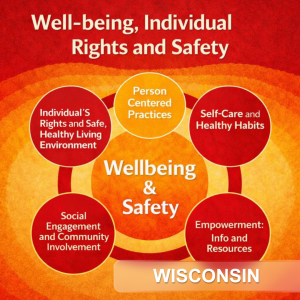
The Council developed the Healthy, Safe, and Connected Toolkit to give people clear, practical information about safety, rights, and community living. The toolkit helps individuals and providers have meaningful conversations about abuse prevention and personal safety. The Council also launched the “Safe and Free” training series to build self-advocacy skills and increase awareness of abuse, neglect, and financial exploitation.
Results
The impact has been wide-reaching. Over 5,000 toolkits have been shared, and more than 300 people participated in the Safe and Free series. Participants gained critical knowledge—many learning for the first time about adult protective services and financial abuse. One participant used what they learned to report abuse and stay safe. These efforts are helping people better protect themselves and stay connected in their communities.
Unique Role of the Council
The Council brings together best practices, training, and real-world application. By turning federal requirements into practical tools, the Council helps people with I/DD understand their rights, stay safe, and fully participate in community life.